Key Takeaways
- Choose a lake home based on your long-term plans, not only the view.
- Include insurance, utilities, shoreline work, and vacancy care in the ownership budget.
- Confirm access, surveys, restrictions, flood exposure, and utility systems before making an offer.
- Use specialist inspections when a property has a dock, septic system, well, seawall, or retaining wall.
Table of Contents
- Why Buy Near Richland Chambers Lake?
- Build a Realistic Budget
- Compare Location, Access, and Community Feel
- Look Beyond the View
- Review Water Access and Shoreline Details
- Study Flood Risk and Insurance Needs
- Read HOA Rules and Deed Restrictions
- Plan a Thorough Inspection Process
- A Simple Richland Chambers Lake Buying Checklist
- Final Thoughts
A weekend home near Richland Chambers Lake can be a place for quiet mornings, fishing trips, family gatherings, and a possible future full-time move. The right property, however, should support how often you will use it, how far you are willing to travel, and how much hands-on upkeep you can manage.
Buyers who want a neighborhood-level perspective can consult Richland Chambers Lake real estate agents, The Teel Team. The Teel Team specializes in helping buyers and sellers navigate lake homes, land, property searches, and local market decisions around Richland Chambers Lake, including communities near Corsicana, Kerens, Streetman, and surrounding areas. Their focus on this specific lake market can be valuable when comparing waterfront access, subdivision rules, and property styles.
Why Buy Near Richland Chambers Lake?
Define the home’s primary role before you begin touring properties. It may be a simple weekend retreat, a gathering place with room for guests, a fishing base, an income property where permitted, or a home you expect to occupy later in life. That purpose should guide decisions about bedrooms, storage, location, water access, and proximity to daily services.
A secluded setting can provide privacy and dark skies, while a home in an established subdivision may offer paved roads, gates, shared amenities, and neighbors who are present year-round. Neither choice is automatically better. The practical question is whether the setting matches your routines in every season.
Build a Realistic Budget
The purchase price is only the beginning. Build a monthly and annual ownership estimate that includes the mortgage, taxes, homeowner’s insurance, utilities, lawn care, pest control, security, and routine repairs. If the property will be vacant for long periods, add regular property checks and storm cleanup to the plan.
Costs That Deserve Attention
- Down payment, closing costs, and lender fees.
- Flood insurance is required by a lender or appropriate for the property.
- Dock, boat lift, seawall, shoreline, and tree maintenance.
- Septic servicing, well testing, driveway repairs, and generator upkeep.
- Furniture, appliances, trailers, watercraft, and outdoor equipment.
A lower-priced home may still be the more expensive choice if it needs a roof replacement, septic repair, dock work, or substantial drainage improvements soon after closing. Request estimates during the inspection period so repair needs become part of the financial decision.
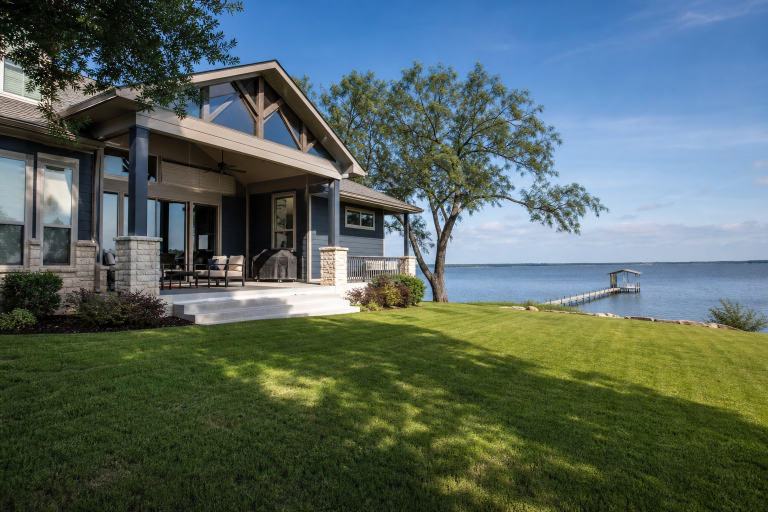
Compare Location, Access, and Community Feel
Visit the same area on a busy weekend and a quiet weekday if possible. Traffic, boat activity, noise, and the availability of nearby services can feel different during holidays, summer months, and the off-season. Check the final miles carefully, especially where county roads, private roads, gates, or steep driveways are involved.
Questions to Ask
- Is the drive time realistic for frequent weekend use?
- Are the roads paved, maintained, and passable after heavy rain?
- How close are fuel, groceries, medical care, restaurants, and boat ramps?
- Do cell service and internet meet your remote-work or security needs?
- Does the neighborhood feel active year-round or primarily seasonal?
Look Beyond the View
Water views can make it easy to overlook deferred maintenance. Review the roof age, HVAC condition, foundation, drainage patterns, electrical panel, windows, and attic. On larger lots, also consider tree health, erosion, storage needs, driveway slope, and emergency vehicle access.
Ask for records related to private wells and septic systems. A functioning system today still needs documented maintenance and a clear understanding of its age, capacity, and location. Older homes may also warrant additional review of wiring, plumbing, chimneys, or structural movement.
Review Water Access and Shoreline Details
“Waterfront” can mean several different things. A property might include direct shoreline frontage, a view with no water rights, shared neighborhood access, or convenient access to a public ramp. Read the survey, title commitment, recorded easements, and applicable dock or marina agreements instead of relying on listing language alone.
Buyers should also ask about seasonal water levels, dock permits, shoreline responsibilities, and limits on future improvements. Texas rules surrounding public water and private shoreline rights can be fact-specific, so reviewing Texas guidance on lake navigability and public access is a useful starting point before seeking advice for a particular property.
Study Flood Risk and Insurance Needs
Flood and drainage concerns are not limited to homes directly beside the water. Review the house, access road, driveway, outbuildings, septic field, and lowest portions of the lot. Ask the seller about prior water intrusion, drainage repairs, insurance claims, and any elevation or engineering documents.
Use the official FEMA Flood Map Service Center to review mapped flood hazards, then obtain an insurance quote before the option period ends. Insurance availability, deductibles, and coverage terms can affect the true cost of ownership.
Read HOA Rules and Deed Restrictions
Request the complete HOA package and recorded restrictions, not just a summary. Confirm annual dues, transfer fees, pending assessments, short-term rental policies, boat and trailer parking rules, building requirements, pet restrictions, and rules affecting docks, sheds, fences, or guest spaces.
Plan a Thorough Inspection Process
A standard home inspection is important, but it may not fully evaluate every lake-related feature. Depending on the property, consider separate inspections for the septic system, well water, dock, seawall, retaining wall, roof, foundation, and wood-destroying insects.
Warning signs include musty odors, soft flooring, standing water, fresh patches around windows, tilted retaining walls, exposed roots near the shoreline, and unexplained utility shutoffs. Treat these as reasons for further evaluation, not automatic proof of a major defect.
A Simple Richland Chambers Lake Buying Checklist
- Define the home’s intended use and preferred drive time.
- Create a purchase budget and a full annual ownership budget.
- Confirm water access, boundaries, easements, and dock rights.
- Review flood mapping and secure insurance estimates.
- Read restrictions, HOA documents, and recent financial information.
- Request surveys, permits, repair records, and utility documentation.
- Complete general and specialist inspections before finalizing the purchase.
Final Thoughts
The best weekend home near Richland Chambers Lake is not necessarily the largest house or the closest one to the shoreline. It is the property that fits your budget, travel habits, maintenance capacity, and future plans. Careful document review, local guidance, and complete inspections can help turn a lake-home purchase into a more confident long-term decision.